
Last updated November 20, 2026
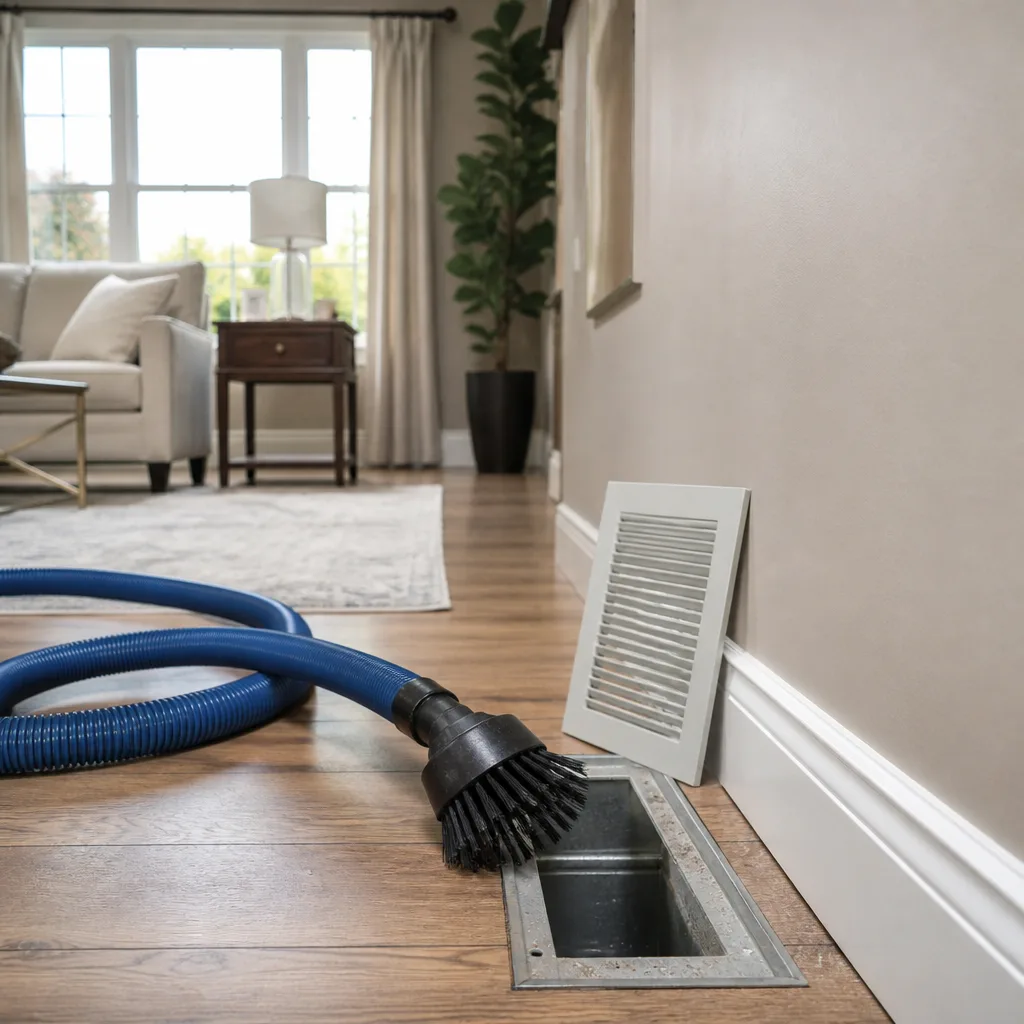 Whole-home duct cleaning
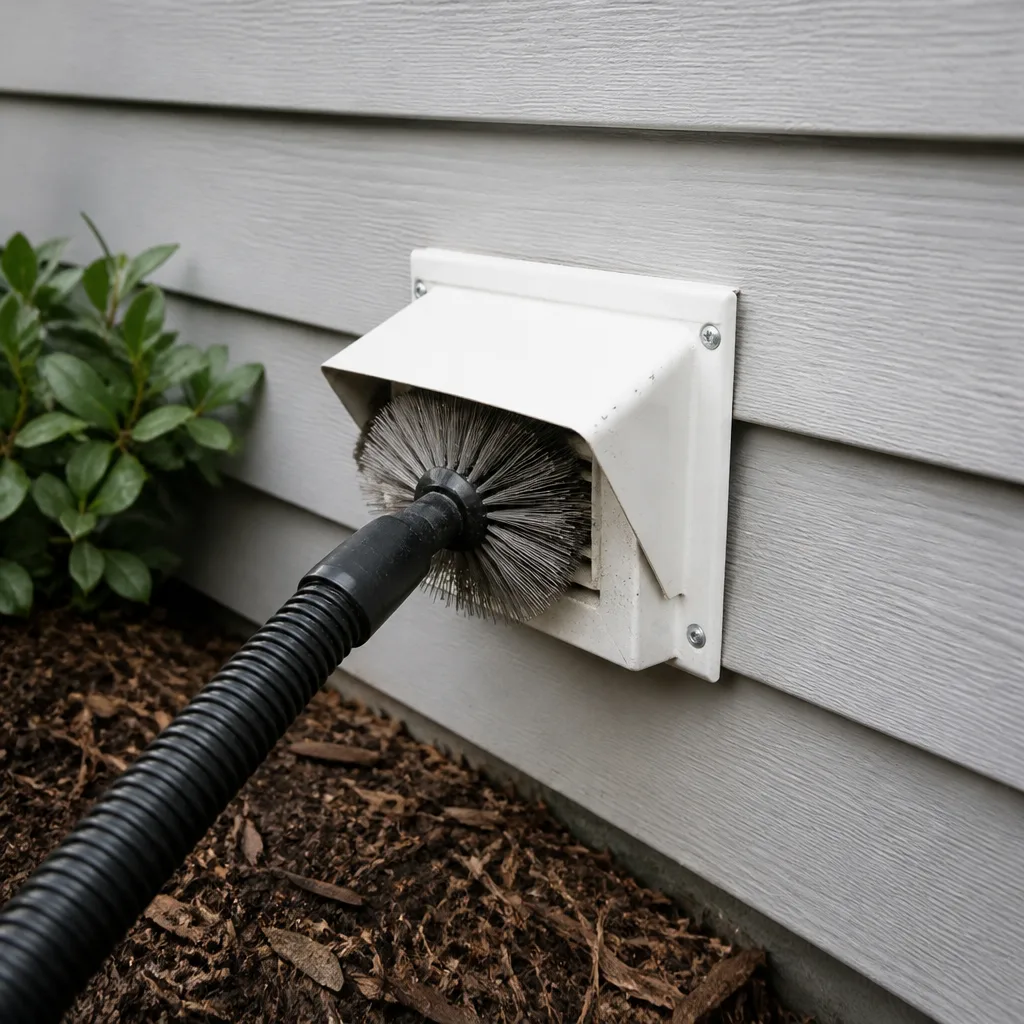 Dryer vent cleaning
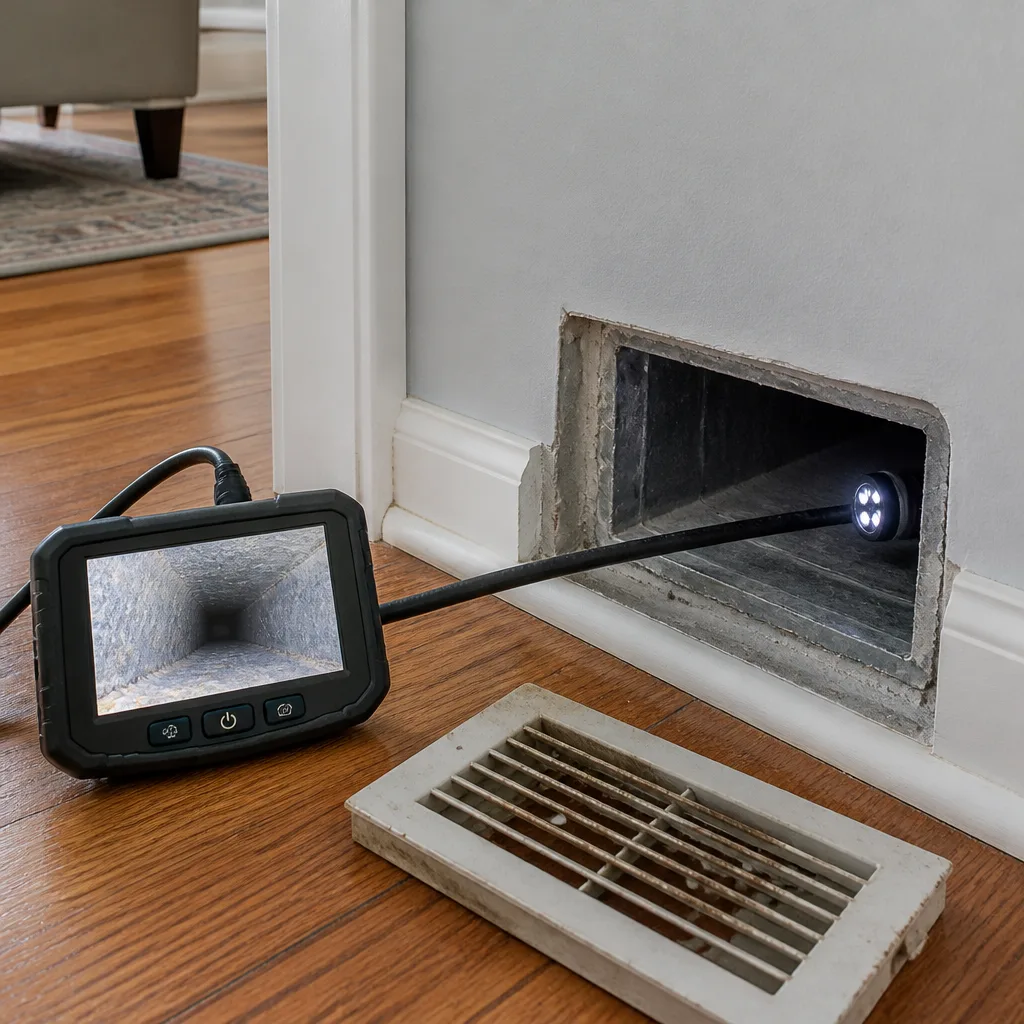 Camera inspection
 Sanitizing & deodorizing
Whole-system duct and dryer vent check with before-and-after photos - you see exactly what came out of your vents
That "$99 whole-house special" is a bait ad - the real number appears once they are in your hallway, or the "clean" is a shop-vac at the register. We photograph the inside of your ducts before and after instead.
Air Duct Cleaning Maintenance Checklist for Bushwick Homeowners
Changing your filter on schedule is not a maintenance program. It’s a minimum. Most filter replacements happen without anyone asking why the old filter loaded so fast, and that question is where the real information lives. A filter that clogs in six weeks and a filter that lasts six months are telling you two completely different stories about your ductwork, and the filter itself can’t tell you which story is yours until you look at how it loaded. This guide is built around what you can actually observe inside a Bushwick home: the grilles, the boots, the floor below the register, and the pattern of dust on a used filter. We’ll walk through seasonal checks tied to the way air systems behave in this city’s climate, how to track your own cleaning intervals based on how you live, and what records to keep so the next technician walks in with useful history instead of starting from zero.
Quick Answer
A workable air duct maintenance checklist for a Bushwick home has four moving parts: read your filter’s loading pattern every time you change it, inspect each supply and return register monthly with your eyes and hands, run seasonal checks before heating season and before AC startup, and keep a written log of what you find so cleaning intervals follow your actual conditions rather than a generic calendar. Professional cleaning then fits into that record as a scheduled event, not a guess.
Styles & brands we work with
- Whole-home duct cleaning
- Dryer vent cleaning
- Camera inspection
- Sanitizing & deodorizing
Table of Contents
- How to Read a Loaded Filter
- Register-Level Inspection You Can Do Without Tools
- Seasonal Tasks for Bushwick’s Climate Cycle
- How to Set Cleaning Intervals That Match Your Home
- What a Dense Urban Block Does to Your Ducts
- The Documentation Worth Keeping
- When the Checklist Says It’s Time to Call
- Common Mistakes to Avoid
How to Read a Loaded Filter
A furnace or air handler filter is a diagnostic tool whether you intended it to be one or not. When you pull it out, don’t toss it straight into the trash. Hold it up to a light and look at where the dust collected. The distribution tells you something about the ductwork behind it.
Even loading across the whole face means the return side is pulling air the way it should. The filter is doing its job and the system is breathing evenly. That’s the boring outcome, and boring is good.
Heavy loading on one side, clean on the other points to a return path that’s doing more work than its share. In a Bushwick rowhouse or a converted multi-unit building, that often means one return trunk is short-circuiting or another return is partially blocked. The filter on the working trunk fills first because it’s moving more air.
A dark patch in the center usually means air is funneling through one section of the filter face rather than spreading across it, which happens when the return boot is undersized for the filter grille or when a duct connection has pulled loose behind the wall.
Loading that looks streaky or striped suggests turbulence from a nearby fitting or a partially closed damper. It’s not an emergency, but it’s worth noting in your log, because a technician can check the branch dampers during a cleaning visit.
- Photograph the filter before you throw it out. The photo is your baseline for next time.
- Write the install date in marker on the filter edge, so the next change tells you an exact interval.
- If the filter loads faster than every three months, that’s a signal to look upstream at the ductwork, not to buy a thicker filter.
- If it loads unevenly, note which side or patch loaded first. That note is worth more to a technician than anything you could describe from memory.
One more thing: a filter that loads fast does not mean you need a more restrictive filter. It means the system is moving a lot of particulate, and a higher-MERV filter can make an air handler work harder against that load. Match the filter to what the equipment is rated for, and let the loading pattern tell you when to look at the ducts themselves. That upstream inspection is where air duct cleaning earns its place in the schedule.
Register-Level Inspection You Can Do Without Tools
You don’t need a camera or a moisture meter to learn a lot about your system. Every supply and return register in your home is an inspection point, and a walk-through with your eyes and a flashlight takes about fifteen minutes in a typical Bushwick apartment or rowhouse unit. Do it once a month during heating and cooling season.
- Look at the grille face. A light, even film of dust is normal. A fuzzy gray mat, a dark ring around the perimeter, or visible debris stuck in the louvers means the boot behind the grille is shedding material into the airstream.
- Shine a light inside the boot. With the system off and the grille removed if it’s removable, look at the duct surface just past the opening. You’re looking for dust that has started to cling and build a visible layer, and for any debris that came loose from a joint.
- Run a finger along the inside edge. A fingertip that comes back with a light gray coating is fine. A fingertip that comes back with a thick, sooty smear or anything that looks fibrous is worth noting.
- Check the floor directly below the register. A faint shadow of dust on the floor under a supply register means air is carrying particulate down and depositing it. That’s a pattern, not a coincidence, and it usually points to contamination collecting near the boot.
- Smell the air at the register when the system first kicks on. A musty or dusty smell that fades within a minute is in the ductwork. A smell that stays is a separate moisture issue worth flagging.
- Listen for whistle or rattle. A whistle at a grille means restricted airflow somewhere on that branch. A rattle can mean a loose connection behind the wall.
Write down what you find, even if all you write is “clean, nothing to note.” A month of “nothing to note” is a useful data point when it changes. In our experience, homeowners who track register conditions for a few months start to notice the patterns that matter long before a duct looks obviously dirty. Keep the checks short and consistent and they’ll actually happen.
Seasonal Tasks for Bushwick’s Climate Cycle
Bushwick’s air system works hardest at two points in the year: when the heat first comes on and when the cooling season starts. Both transitions push the system through its biggest change of the year, and both are the right time to check the whole air path. Between those points, the system runs at lower output and the signals are quieter.
Pre-Heating-Season Check (late September to October)
- Replace the filter before the first sustained heat call, not after.
- Walk every register and look for dust that accumulated over the summer cooling season. Any register that loaded during cooling is a candidate for a closer look.
- Check the return grille for pet hair and debris collected over the summer. Pet owners in a Bushwick apartment will find more here than they expect.
- Confirm the air handler closet door and any access panel is sealed. An unsealed panel pulls unconditioned air from a closet or hallway, which loads the filter faster.
- Note any musty smell when the heat first comes on. That smell is the ductwork warming up and releasing what collected over the summer.
Post-Winter Check (March to April)
- Pull the filter and read the loading pattern one more time. Winter is the heaviest-use season, so the winter filter tells you the most about your ductwork.
- Inspect the boot of the return grille, where winter dust often collects most heavily.
- Check any basement or utility-closet duct runs for condensation or staining, especially in older buildings where duct insulation can be thin.
- Note if the filter interval dropped over the winter. A filter that used to last three months and now lasts six weeks is a trend worth acting on.
Pre-AC Startup Check (May)
- Replace the filter again and photograph the old one. Compare against the winter photo.
- Run the system on fan-only for ten minutes and walk each register. Smell and dust drift at each supply will reveal which branches are carrying the most contamination.
- Look at the floor below each supply register after ten minutes. A fresh dust pattern is your best visual indicator heading into cooling season.
- Note any register that whistles or pushes noticeably less air than the others. Uneven airflow is a maintenance signal, not just an inconvenience.
Two or three times a year is enough for the full walkthrough. The check you do most often is the filter, and that’s monthly in most Bushwick homes.
How to Set Cleaning Intervals That Match Your Home
“Every three to five years” is the number quoted most often, and it’s fine as a starting point and wrong as a rule. Duct cleaning intervals depend on what’s actually happening in your home, and the checklist above is how you find out what that is. Here is how we think about the factors that move the interval.
| Factor | Effect on Cleaning Interval |
|---|---|
| Pets indoors, especially double-coated breeds | Shortens the interval noticeably. Pet hair loads returns quickly and can carry into the supply side. |
| Recent renovation or plaster work | Shortens the interval significantly. Drywall dust and construction particulate are heavy loads that settle in the ducts. |
| Street-level unit on a busy Bushwick block | Shortens the interval. Street particulate loads the filter and the return faster than an upper-floor unit on a quieter block. |
| Smokers in the home | Shortens the interval. Smoke particulate clings to duct surfaces and accumulates. |
| Allergy or asthma symptoms in the household | Shortens the interval, and raises the priority of the register-level checks. |
| Lower-floor apartment with a boiler or utility closet nearby | Can shorten the interval depending on how well the closet is sealed from the air handler intake. |
| Second- or third-floor walk-up unit on a quieter block | Extends the interval. Less street particulate, less return loading. |
| Home with a ducted system that runs all year | Standard interval. The system is doing steady work without major loading events. |
The practical method: start with a two-year check-in and let the register inspections tell you whether the branch is clean or starting to load. If you’re seeing the registered signs of a buildup (dust on the floor below supplies, sooty film at the boot, musty smell on startup), the interval is shorter than you think. If you’re seeing clean registers and normal filter loading, you can extend it. The checklist is doing its job when it answers the interval question for your home rather than a generic national average.
Bushwick rowhouse and multi-unit buildings tend to have short duct runs compared to suburban houses, which is one thing that can work in your favor. But older buildings often have unsealed joints, and a joint that’s pulling air from a wall cavity is a loading source that a short duct run doesn’t fix. That’s why the register-by-register look matters more than a general timeline.
What a Dense Urban Block Does to Your Ducts
A unit on a Bushwick block that faces a busy avenue is pulling in a very different particulate load than a suburban house behind a lawn. Street-level dust, brake and tire particulate, construction dust from the steady stream of renovation work across the neighborhood, and the seasonal leaf and pollen load from nearby street trees all end up in the same air column your air handler draws from. The system doesn’t distinguish between a source you like and a source you don’t. It just moves the air and traps what the filter catches.
The register-level checks above are how you see the load. The things that tend to surprise people:
- Ground-floor and garden-level units load faster than upper floors, and much faster than corner units with windows on quieter blocks.
- Return grilles near a kitchen pull cooking particulate and grease vapor that can leave a sticky film on duct surfaces over time.
- Units next to a construction site during a building renovation can load a filter in a matter of weeks. If your block has active renovation work, run the register checks more often.
- Street-facing units pull more window dust and sidewalk grit through door and window infiltration, which enters the return path.
We recommend running the register checks on a shorter cycle (every two weeks instead of monthly) during heavy construction activity on your block. When the construction wraps, that’s the right time to think about a professional cleaning rather than waiting for the usual interval to come around. The Air Duct Cleaning Bushwick service handles the full supply and return run in a single visit, which is part of why construction debris is easier to clear in one pass than seasonally.
The Documentation Worth Keeping
The single most useful thing you can hand a technician is a written record of what you’ve observed. A history of your system saves time, targets the inspection, and turns a generic cleaning visit into a specific one. Here’s what’s worth keeping.
- A cleaning log. Date of the last professional cleaning and which service was done (air ducts, dryer vent, HVAC unit, or a combination). One line per visit is enough.
- A filter log. Install date, removal date, and a one-word description of the loading pattern (even, one-sided, center, streaky). Photos if you have them.
- Register inspection notes. Which registers you checked, what you found, and the date. If a register showed buildup, note where.
- Renovation history. When the last major work happened in the unit and what it involved. That’s a major input to any technician’s interval recommendation.
- HVAC equipment notes. The make and model of the air handler or furnace, and any service history. Homeowners with a Honeywell or Aprilaire system will find the model number on the equipment panel.
- Any prior cleaning invoices. If a previous owner or landlord had the ducts cleaned, the invoice from that visit tells the next technician what was done and how long ago.
Keep it in a single folder, either paper in the utility closet or a phone folder. The point isn’t the format, it’s that you can find it in two minutes when someone asks. A log like this turns a technician’s first ten minutes on site from “guess what we’re dealing with” into “we’ve got a two-year history of a return that loads on one side.” That’s a real improvement in service quality, and it costs you about a minute every time you change a filter.
When the Checklist Says It’s Time to Call
The checklist’s purpose is to tell you when your own observations have run out of useful next steps. Call when you hit one of these signs: a filter that loads faster than every two months for two consecutive filters, a visible layer of contamination on the boot surface inside a supply register, a persistent musty smell on system startup that doesn’t clear, or visible dust falling from the register when the fan runs. Any of those signs means the ductwork itself is carrying a load the filter isn’t handling, and the next step is a professional cleaning with proper extraction.
The professional part of the checklist matters because duct cleaning is a two-step mechanical process, not a single pass with a shop vacuum. The contamination has to be dislodged from the duct surface with rotary brushing, and then the dislodged material has to be captured and pulled out of the system with extraction equipment. Skipping either step means you’re redistributing what’s already in the ductwork. We bring Rotobrush rotary-brush systems and Nikro extraction equipment to every job, and we run Abatement Technologies filtration units during the service so the dislodged particulate is captured rather than recirculated into the room. That’s the remediation-grade standard, and it’s what the checklist’s “call a professional” step is really about.
Air Duct Cleaning Bushwick offers free estimates in Bushwick. Call (844) 946-2799, and we’ll walk the system with you and quote per job, not per vent. Our technicians have up to 13 years of experience, and every visit covers the full air path: supply and return ducts, the HVAC unit itself, and dryer vent cleaning if you want it in the same visit.
Dryer Vent: The Checklist Item That Isn’t About Air Quality
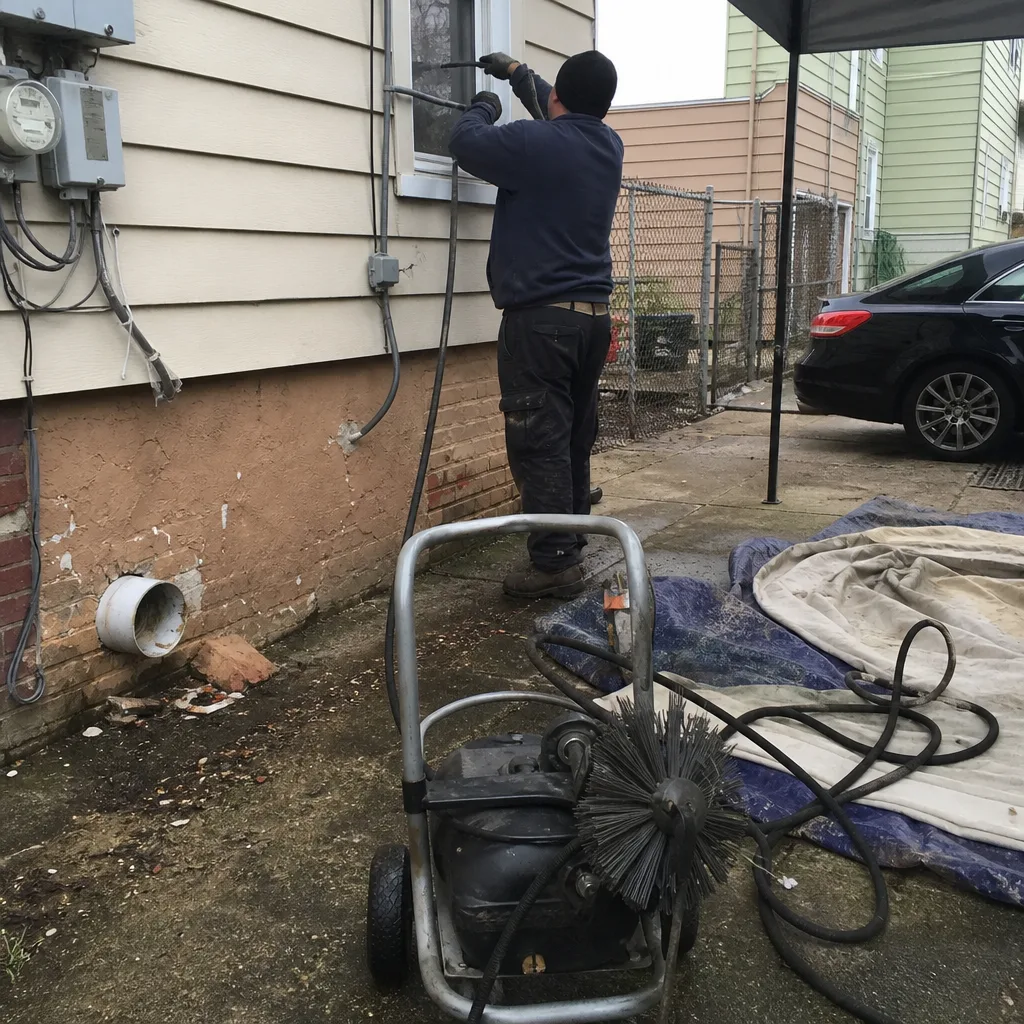
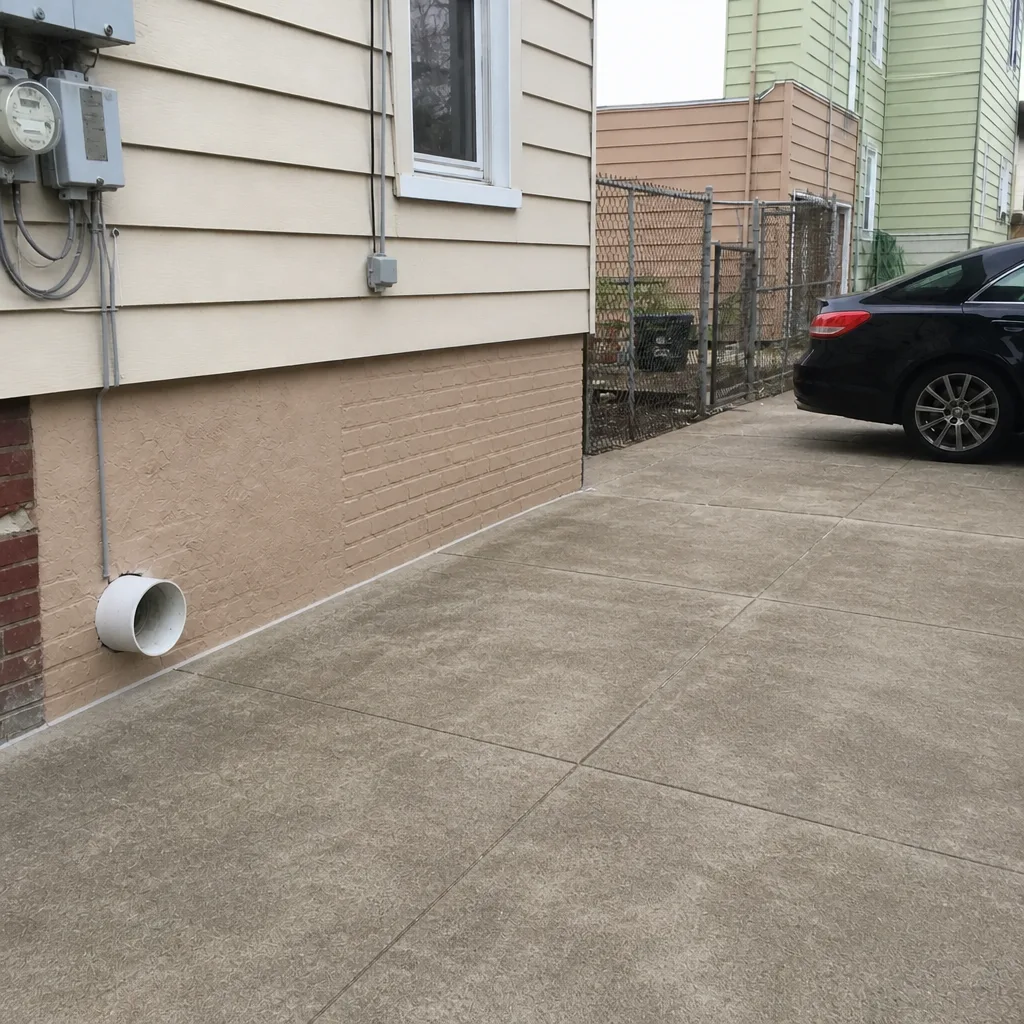
One part of the home air system runs on a different checklist and deserves its own line. Lint accumulation in a dryer vent is a fire hazard, not just an efficiency issue, and the visible inspection you can do yourself is limited to the outside damper and the lint trap. If the trap fills faster than usual, if a full load takes noticeably longer to dry, or if the exterior damper flap doesn’t open freely when the dryer runs, book a dryer vent cleaning and let a technician run a proper brush through the full vent path. Those signs don’t resolve on their own, and they’re the ones worth treating as urgent rather than waiting for a seasonal window.
See the difference
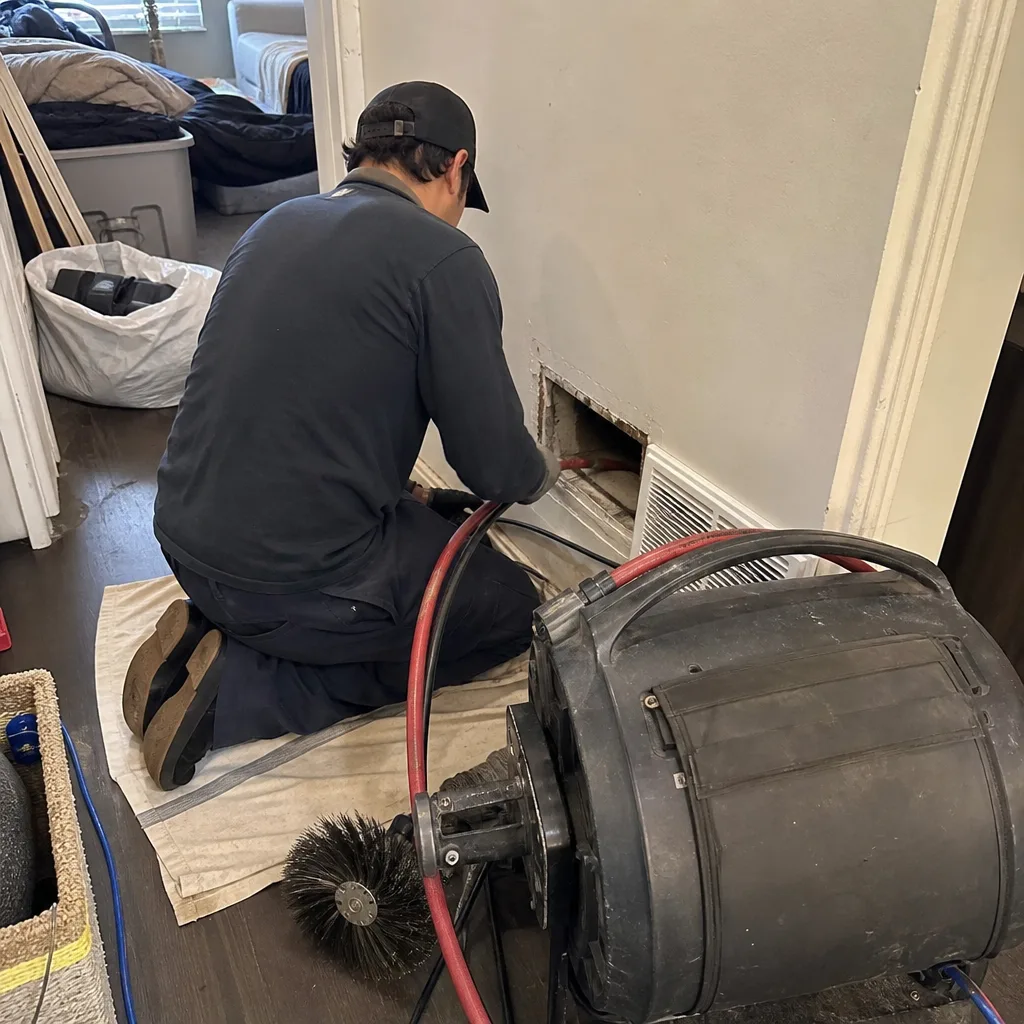 Before
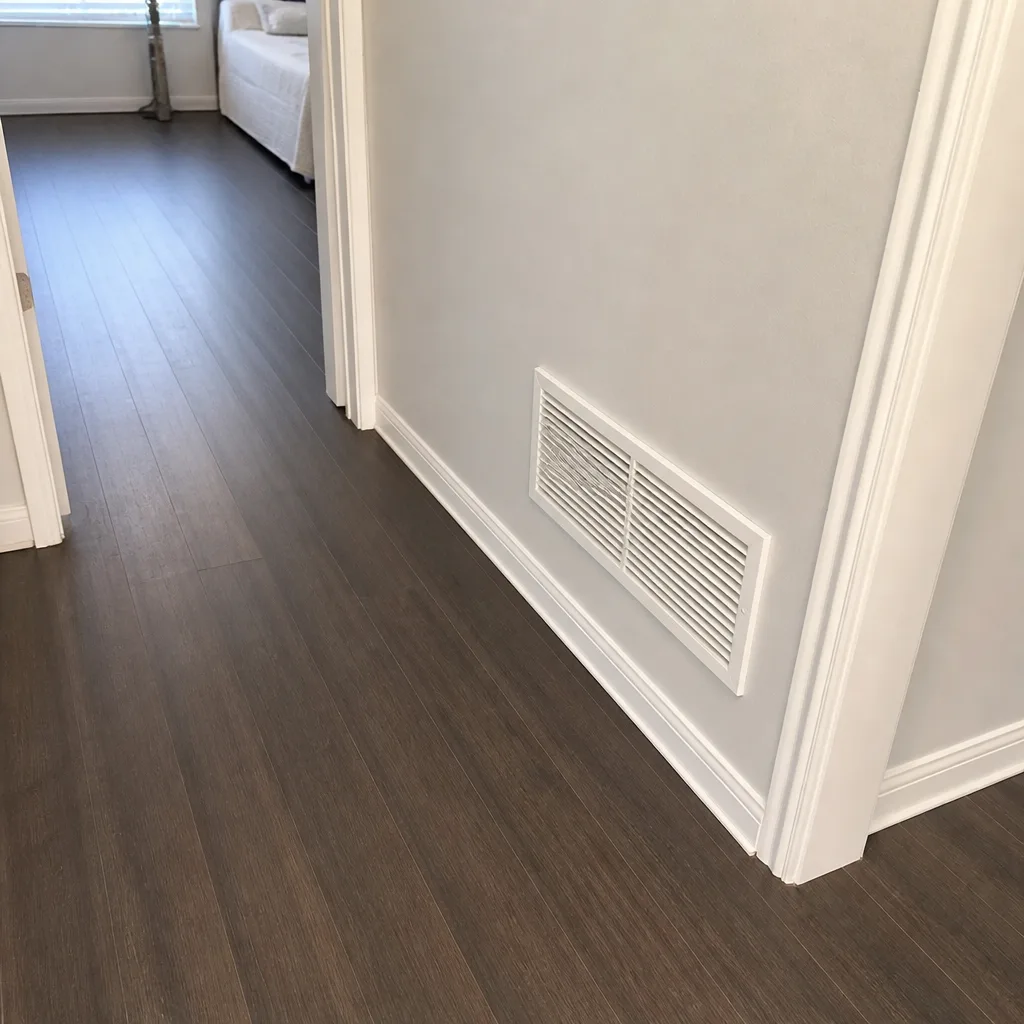 After
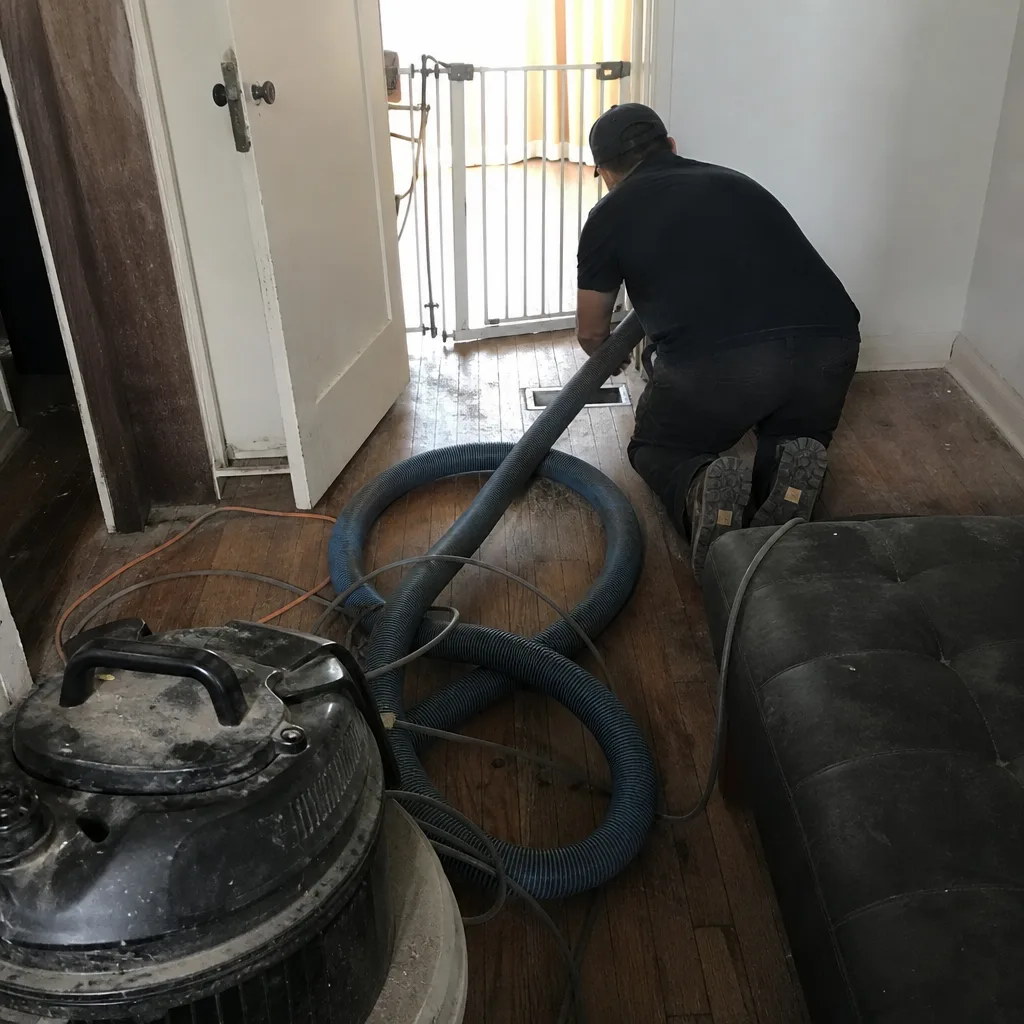 Before
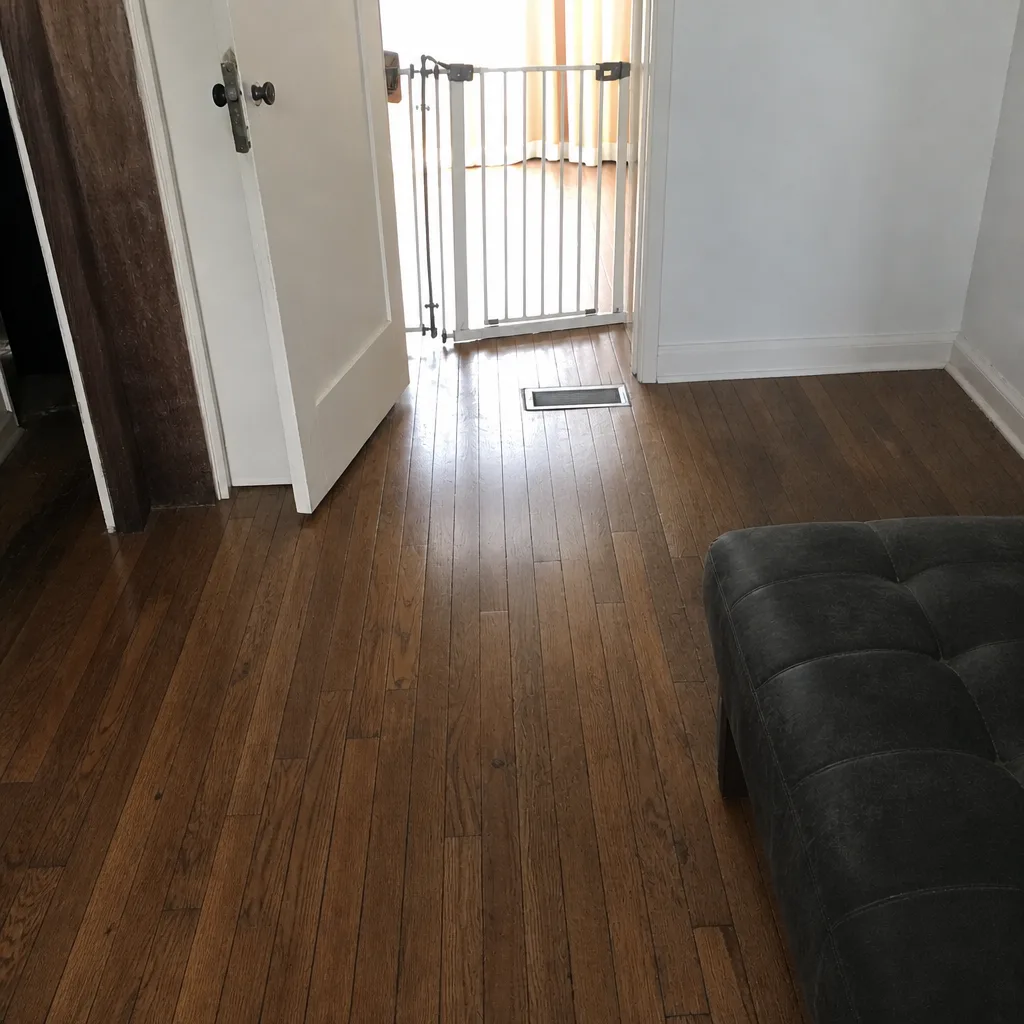 After
 Before
 After
Common Mistakes to Avoid
- Treating the filter interval as the whole maintenance program. A filter is a filter. The information it gives you about the ductwork is the maintenance program, and that’s what most homeowners skip.
- Buying a higher-MERV filter to fix the loading problem. A more restrictive filter strains the air handler without addressing what’s loading the ductwork. Match the filter to the equipment rating and address the loading source separately.
- Skipping the register checks because they seem too simple. The register is the cheapest diagnostic you have. Fifteen minutes with a flashlight tells you more than a season of guessing.
- Assuming a Bushwick rental’s ductwork is “the landlord’s problem.” The air you breathe is the tenant’s problem, and the observations you log are what get a landlord to act. Document and notify in writing.
- Bookkeeping the cleaning but not the loading pattern. A record of “cleaned in 2024” is worth less than “cleaned in 2024, filter loading every six weeks since mid-2025, one-sided on the return near the kitchen.” The second one is a diagnosis.
- Waiting for a visible plume of dust from the register before calling. By the time you see that, the duct has been loaded for a while. The register film and the startup smell are earlier signs, and they’re the ones you should act on.
- Letting a renovation pass without a post-work check. Drywall dust and plaster dust settle into the return path during the work. A register inspection right after the work wraps will tell you whether the system needs a cleaning before the next season starts.
Frequently Asked Questions
Once a month during heating and cooling season, and every two weeks if your block has active construction or your unit is street-level. A visual check of the grille face and the boot surface takes about two minutes per register.
Pricing is set per job by a written estimate, not per vent, because the estimate depends on the size of the system and the condition we find during a walkthrough. The estimate itself is free. Call (844) 946-2799 to schedule one.
A low quote usually covers a quick pass with consumer-grade gear and skips the extraction step. The real work is dislodging contamination with rotary brushing and capturing it with proper extraction and filtration. Skipping one of those steps means the contamination gets redistributed rather than removed. Call (844) 946-2799 for a quote built on the full process.
Ask for before-and-after photos of your own ductwork. A technician with professional gear can show you what the boot surface and the return trunk looked like before and after. If a company can’t show you the difference on your own system, that’s a signal. Call (844) 946-2799 and ask for photos with the estimate.
Yes, for now. Even loading and clean register faces are legitimate signs that the duct system is holding up. Continue the register checks and re-evaluate if the loading pattern changes, the smell on startup appears, or the register film thickens. Call (844) 946-2799 if any of that shifts.
Yes, on a different line. The trap fills, the exterior damper, and the drying time are the visible signs, and a proper cleaning runs a brush through the full vent path. Book a HVAC cleaning or dryer vent service in the same visit if both are due. Call (844) 946-2799 to schedule.
The Bottom Line
A maintenance checklist only works if it’s built around what you can actually observe in your home, not what a brochure says is thorough. Read your filter’s loading pattern, check your registers monthly, run the seasonal transitions, track your own interval based on pets and renovation and street-level load, and keep a log a technician can use. Do those four things and the question of when to book a professional cleaning answers itself. When that answer arrives, call (844) 946-2799 for a free estimate from Air Duct Cleaning Bushwick. We answer 24/7. Fast dispatch from 7am to 7pm, Sunday through Friday, and the price is set per job by the written estimate before any work starts.
Written by the team at Air Duct Cleaning Bushwick.