
Top Signs You Need Air Duct Cleaning Service – Don’t Ignore These
Dust on a vent cover means almost nothing by itself. Every duct system builds a surface layer within months of any cleaning, and that’s normal physics, not a red flag. The signs that actually point to a system problem are subtler than the checklists you’ll find elsewhere, and they almost never show up on the coupon mailers. Below is how to read them properly, in a Bushwick rowhouse or apartment, before you spend a dollar.
What the Warning Signs Actually Tell You About Your Ducts
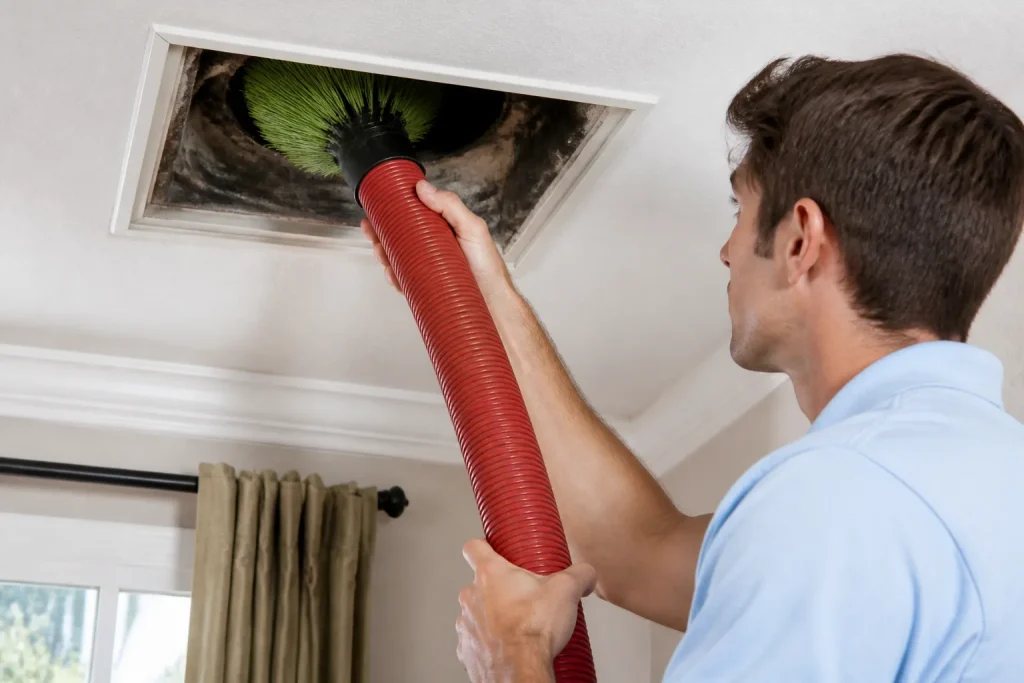
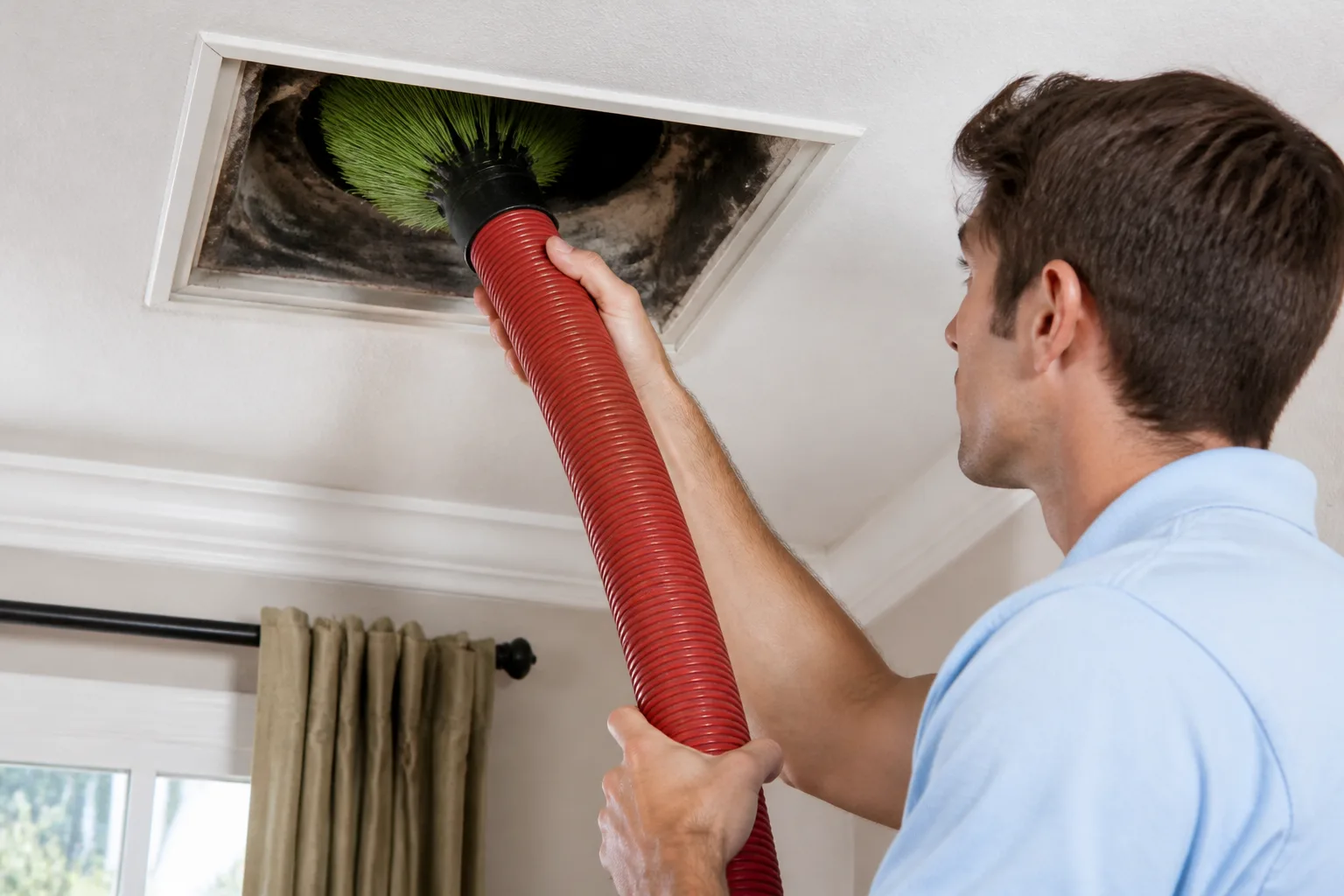
Before you can judge a symptom, you need to know what produces it. Air duct cleaning is a two-step mechanical process: brush agitation to dislodge what’s stuck to the walls, then high-volume extraction to pull it out of the system. The equipment matters here. Professional rotary-brush systems like the Rotobrush line work the duct interior mechanically, and extraction units like the Nikro brand create the negative pressure that carries debris out instead of letting it settle back. When we deploy Abatement Technologies air-filtration units on a job, the point is to capture dislodged material at the source rather than recirculating it through the rooms you’re standing in. That remediation-grade standard is how a real cleaning differs from a vacuum waved at a register. Knowing the two-step process helps you interpret every symptom below, because each one is telling you something about debris depth, airflow resistance, or what’s growing on the liner.
Cosmetic Dust vs. Debris That Actually Restricts Airflow
Most of the “signs you need duct cleaning” lists confuse surface dust with restriction. They’re not the same thing, and the difference matters for your HVAC efficiency, not just your air quality. Cosmetic dust is a light, even film on a register face and the first few inches inside. It reappears within weeks of cleaning and tells you almost nothing. Debris depth is different. Pull the register cover and look past the first bend with a flashlight: if you can see a matted layer more than a thin film, or clumps that stay put when airflow passes, you’re looking at accumulation heavy enough to raise resistance in the system. That resistance is what forces your HVAC equipment to work harder to move the same volume of air. In our experience across Bushwick, the tell isn’t the dirt on the grille. It’s whether the debris is loose (moves freely) or bonded (stuck to the duct wall and needs mechanical agitation to break free). Bonded debris is what a rotary brush exists to address.
Uneven Room Temperatures: A Restriction Signal, Not a Thermostat Problem
If one room in a Bushwick apartment runs hot while another runs cold on the same thermostat setting, resist the urge to blame the thermostat. Inconsistent temperatures across a rowhouse or multi-room unit are one of the clearest diagnostic clues you’ll get. The question is whether the cause is a duct restriction or insulation loss. Here’s the crude field test: if a room is consistently far off from the rest and the register still has real airflow, suspect insulation or a leaky run. If a room feels weak on airflow and slow to condition, suspect restriction, and accumulated debris is a common contributor. Note the pattern across a week. A single cold room points one way; a whole floor lagging points another. Restricted ducts force conditioned air to back up, so rooms farther from the air handler lose out first. That’s why this symptom so often shows up in the far bedrooms of a Bushwick rowhouse and not the front rooms. If you’re noticing the pattern, a visual inspection of the trunk and register runs is the next honest step, not a new thermostat.
The Specific Smells That Point to Different Problems
A smell from your vents is a clue, but only if you can tell which smell it is. Three common ones mean three different things, and each asks for a different response.
- Musty, earthy, basement-like: the profile that most often points to mold colonization on or near the liner, usually where moisture has gotten into the system. This needs a proper inspection, not just a cleaning.
- Sharp, foul, rotting: the profile of dead animal debris or a pest intrusion in a duct run. You want the source located and removed, not just masked.
- Chemical, plasticky, glue-like: often VOC off-gassing from degraded duct liner or a failing sealant. Off-gassing tends to worsen when the system heats up, so it may only appear when the HVAC runs.
Telling these apart before you call saves time and money. Describe the smell precisely when you book, and note whether it appears only at startup, only with heat, or all the time. That detail changes what the technician inspects first. It also stops the wrong job from being sold to you, which is a real risk when you call the first number you find.
Allergy Symptoms That Track HVAC Runtime, Not Season
Here’s an indicator most lists miss. If your allergy or congestion symptoms spike specifically when the HVAC system is running, and settle when it’s off, that’s a more reliable signal than general dust presence. The correlation with runtime tells you the system is moving something that bothers you. Seasonal symptoms rise and fall with pollen counts regardless of the HVAC. Runtime-correlated symptoms rise and fall with the blower. That distinction is worth watching for a week or two before you act. If you notice the pattern, and it’s paired with anything on this page, it’s worth a professional look. For reference, we’re familiar with Honeywell and Aprilaire systems common in Bushwick homes, which matters when the air-quality equipment and the ductwork are being evaluated together. Same for Guardsman components. The systems inside these homes are not all the same, and understanding them is part of the job.
How to Do a Quick Visual Read Before You Call Anyone
You don’t need to disassemble anything to get a rough read on liner condition. Use a flashlight and your phone camera at one register. Pop the cover, angle the light down the run, and take a photo. Look for three things: a matted or bonded debris layer deeper than a thin film, visible liner damage (peeling, cracking, or a fuzzy interior), and any sign of moisture or staining. The camera’s flash will often reveal texture your eye misses. What you find helps you describe the situation, which means a more accurate scope and a fairer price. If what you see is just a light dust film, you can likely wait. If you see a matted layer, damaged liner, or anything wet, that’s your threshold. When to call a pro: bonded debris, damaged liner, moisture, or persistent smells all cross the line from normal accumulation to something that needs the right equipment. If you’d rather not DIY, give us a call at (844) 946-2799.
Related services in Bushwick: if your symptoms point at the dryer side, look at dryer vent cleaning. If your air-quality equipment or HVAC unit is part of the picture, HVAC cleaning covers that side of the system.
Why Equipment and Process Matter More Than the Cheapest Quote
Here’s where the warning signs tie back to who you hire. The two-step process (agitation plus extraction) only works with contractor-grade tools. A hardware-store vacuum with a hose taped to a register cannot create the pressure needed to remove bonded debris, and it may just loosen contaminants into your rooms. That’s why the professional brands matter: air duct cleaning done with Rotobrush rotary brushes and Nikro extraction pulls material out rather than moving it around. Our technicians have up to 13 years of experience, and every job stays within our three core services, which means the work is done by people built for this specific job, not added on between unrelated trades. One flat price per system, agreed before work starts, and before-and-after photos of your own ducts so you can see what changed. When you’re ready to book, call (844) 946-2799. We answer 24/7. Fast dispatch from 7am to 7pm, Sunday through Friday.
The Bottom Line
The signs worth acting on are structural, not cosmetic: bonded debris deep enough to raise airflow resistance, uneven room temperatures that follow airflow weak spots, smells you can identify by type, and allergy symptoms that track HVAC runtime instead of season. Surface dust alone is not the trigger. Use the flashlight-and-camera read to get a rough sense, then call a pro when the findings cross the threshold. If you’re in Bushwick and need help, Air Duct Cleaning Bushwick offers free estimates. Call (844) 946-2799 and we’ll look at your full air system: ducts, dryer vent, and HVAC, one qualified team, contractor-grade equipment, and a written estimate before any work starts.
Frequently Asked Questions
Bonded debris you can see past the register, a matted layer stuck to the duct wall rather than loose dust. That points to airflow restriction, which is worth addressing. Light surface dust by itself is normal. For an exact assessment, call (844) 946-2799; estimates are free.
It depends on your system and what you’re seeing, not a fixed calendar. If you have bonded debris, damaged liner, moisture, or a persistent smell, schedule an inspection. If you only have cosmetic dust, you can wait. Call (844) 946-2799 and describe what you find; estimates are free.
Usually because the equipment is lighter or the scope is thinner. A consumer-grade vacuum can’t create the extraction pressure a professional rotary brush setup like the ones we use provides. Ask what equipment and filtration will be used. Call (844) 946-2799 for a free estimate and a clear scope.
Ask for before-and-after photos of your own ducts. That’s a fair way to verify the two-step process happened. Reach out and we’ll walk you through what we’d do on your system. Call (844) 946-2799; we answer 24/7, and dispatch runs 7am to 7pm, Sunday through Friday.
Written by the team at Air Duct Cleaning Bushwick.
Need Air Duct Cleaning Help?
Call Air Duct Cleaning Bushwick - the local pro we connect you with is licensed and insured, with free written estimates in Bushwick.
(844) 946-2799